

Crochet technique
Mosaic Crochet
Mosaic crochet, also called mosaic or overlay crochet, creates geometric colourwork using only one colour per row. Rows alternate two colours, and long double crochets worked into the skipped stitches two rows below create the pattern. Charts show which stitches are single crochet and which are dropped-down double crochets.
By the crochetpatterns.io editorial team · Reviewed · Editorial policy
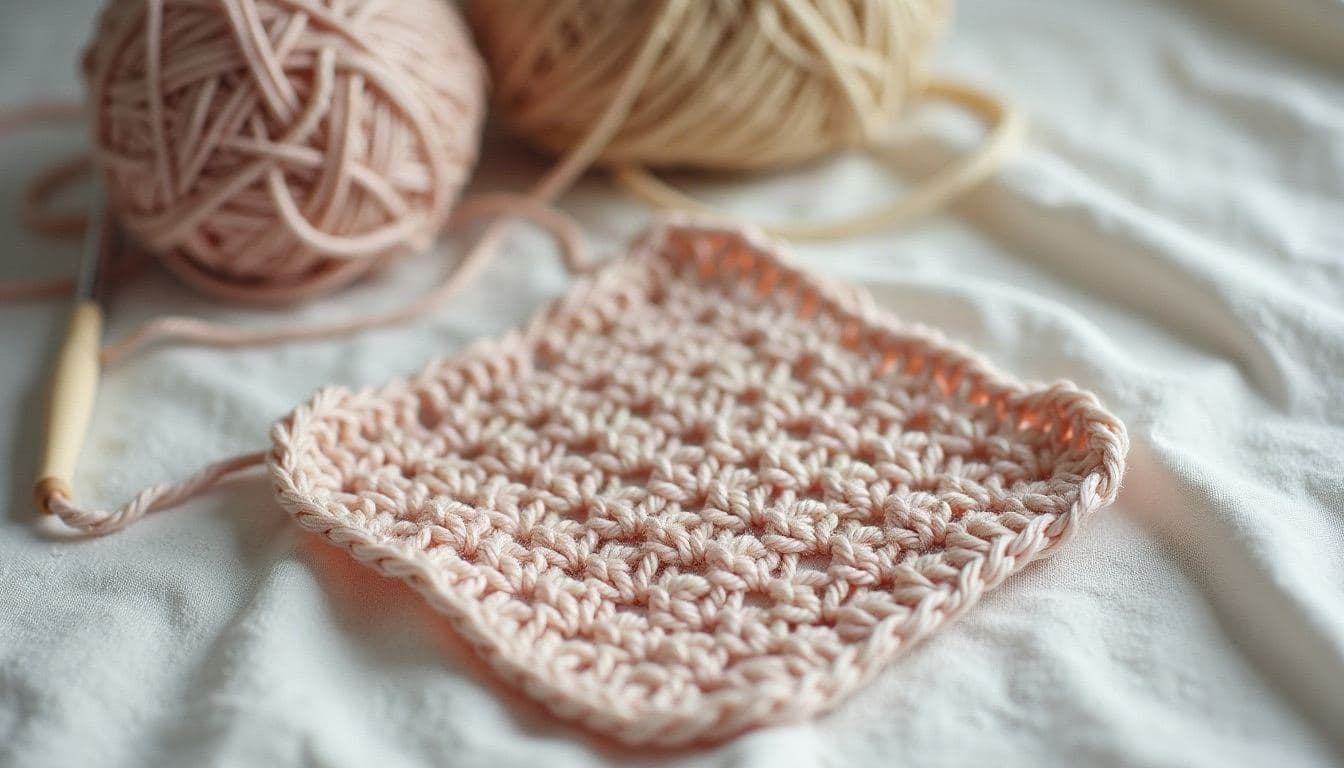
How to get started with mosaic crochet
- Work a foundation row of sc in colour A; do not turn — mosaic is often worked right side only.
- Change to colour B and sc in the back loop only across the row.
- Where the chart shows a chain, ch 1 and skip the stitch below.
- On the next colour A row, work a dc in front of the chain into the skipped stitch 2 rows below.
- Leave yarn tails of about 15 cm at each row end for a fringe or later weaving.
- Follow the chart row by row, alternating colours every row.
How does mosaic crochet work?
Mosaic crochet works by alternating two colours every row and using long double crochets into stitches two rows below to pull colour up into the current row.
Only one colour is used per row, so there is no carrying of yarn.
What is the difference between American and Dutch mosaic crochet?
American mosaic crochet is usually worked in rows turning every row, while Dutch or overlay mosaic is worked from the right side only with yarn cut at the row ends.
The chart symbols and resulting fabric differ, so charts are not interchangeable without converting.
What can you make with mosaic crochet?
Mosaic crochet is used for blankets, pillows, bags and scarves with bold geometric designs.
The fabric is thick and firm, so it suits structured items.
Frequently asked questions
Is mosaic crochet hard?
It uses only sc, ch and dc, but chart reading takes practice.
Do you cut the yarn every row?
In right-side-only mosaic, yes; in American mosaic, no.
Is mosaic crochet the same as tapestry?
No. Mosaic uses one colour per row; tapestry uses several.