
Free preview · full pattern in the Vintage Afghans & Bedspreads
Six Pointed Star Popcorn Bedspread (1941): vintage crochet pattern
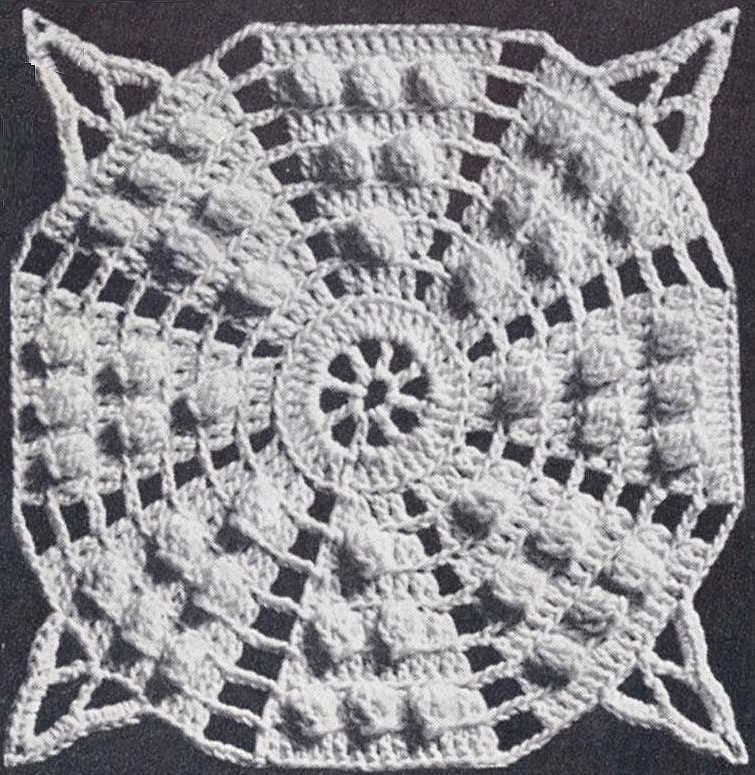
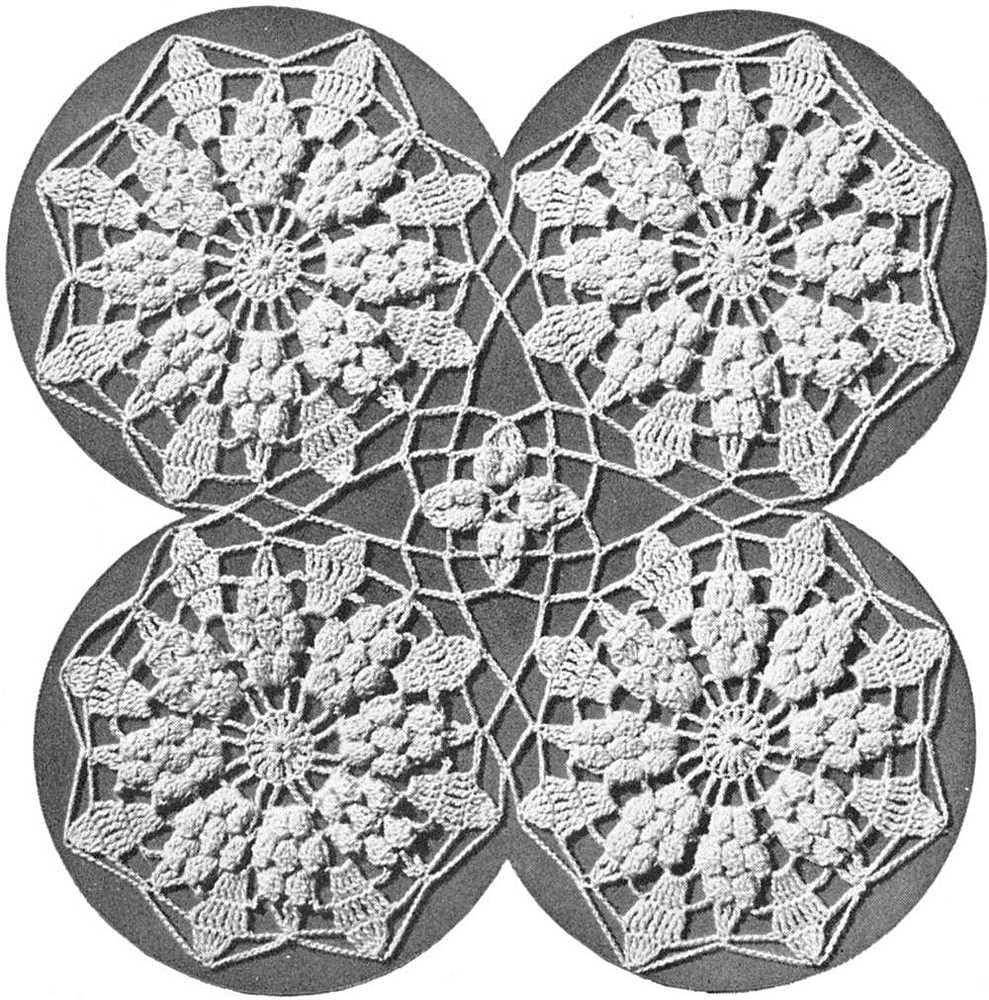
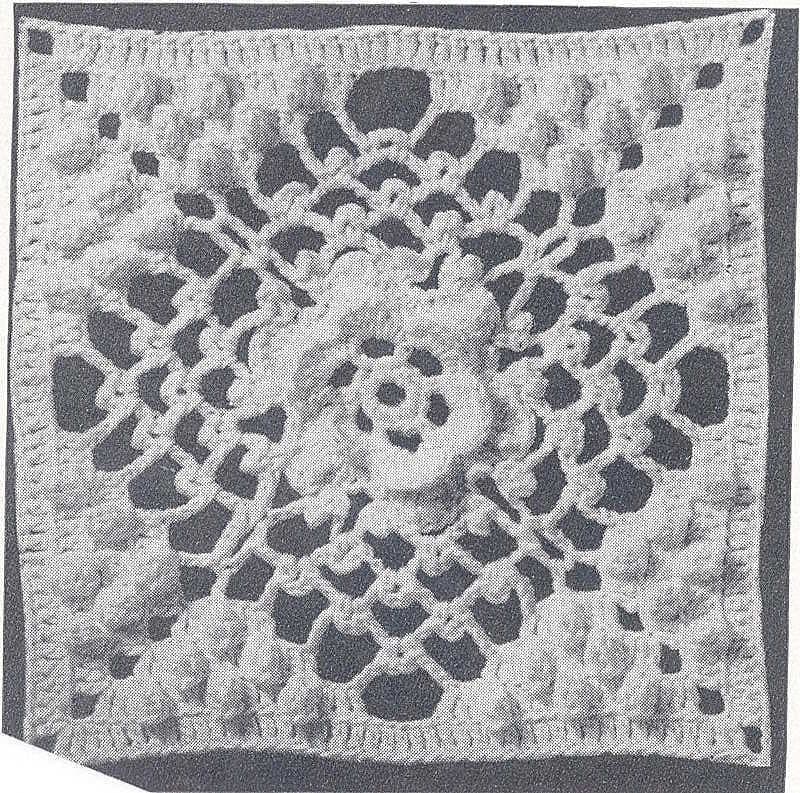
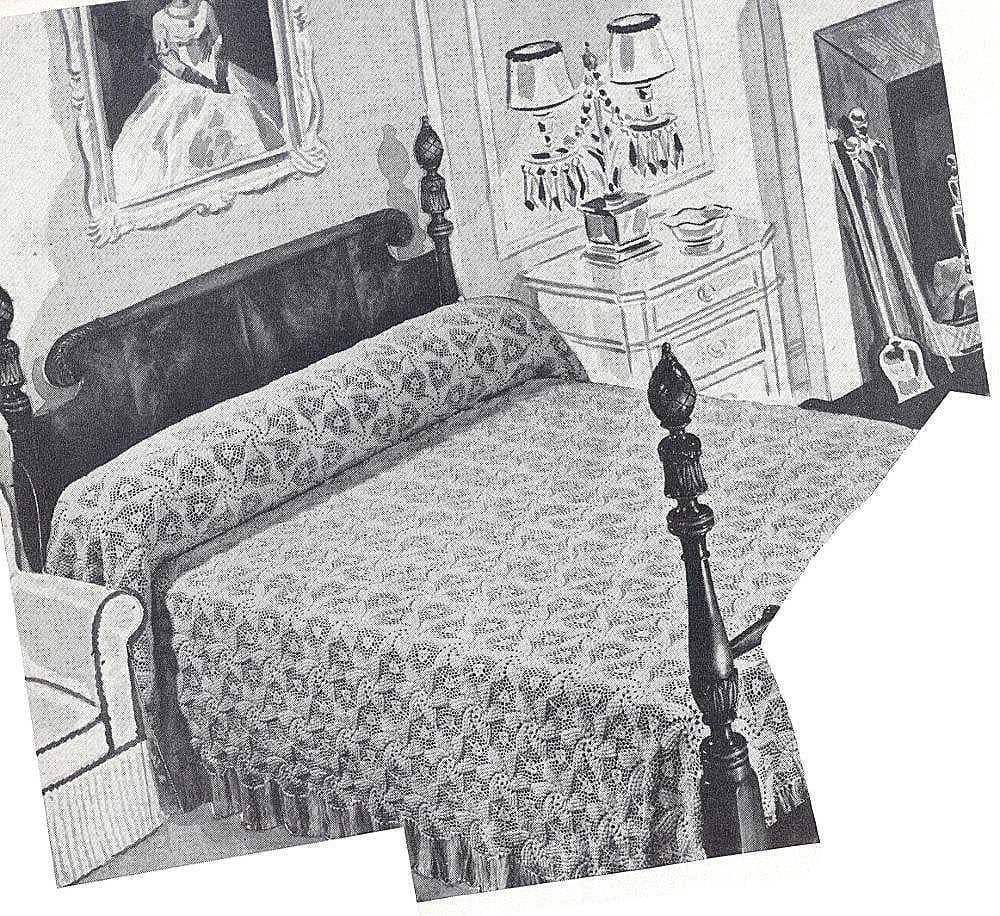
A bedspread of six-sided blocks, 7½ inches across, worked in back-loop double crochet with popcorn-studded star points divided by chain-4 openings and an outer lattice of chain spaces. The blocks are whipped together and fringed. Originally published as "Six Pointed Star" in Old and New Favorites: Crochet Designs (Book No. 173) by The Spool Cotton Company in 1941.
By the crochetpatterns.io editorial team · Reviewed · Editorial policy
By the crochetpatterns.io editorial team · Reviewed September 14, 2026 under our editorial policy · pattern testing in progress
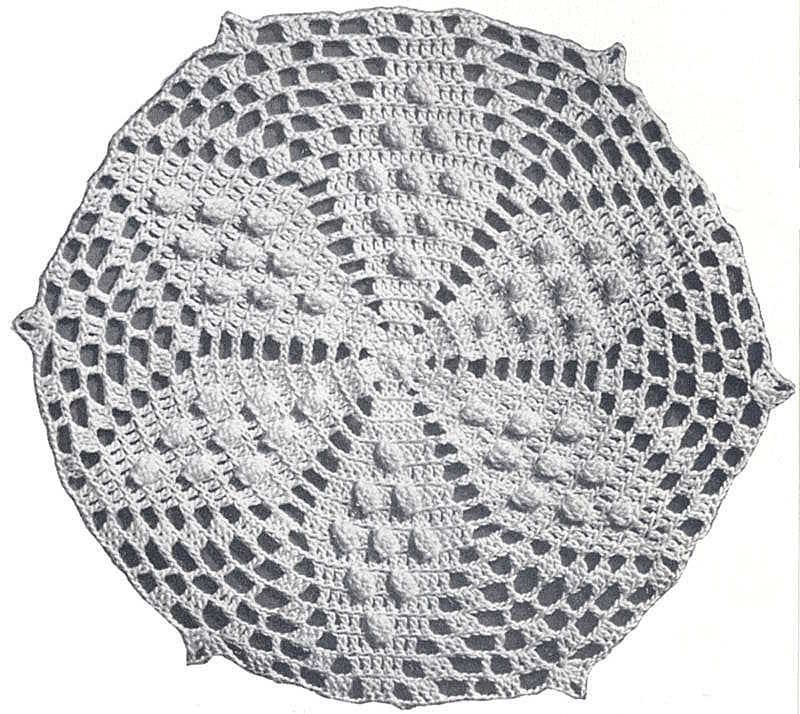
| Detail | Value |
|---|---|
| Skill level | Advanced |
| Yarn weight | Lace (#0) |
| Yardage | 81–90 yd (74–82 m) |
| Hook | 1.9 mm |
| Gauge | As printed: each block 7½ in (19 cm) across. |
| Finished size | Not printed; each block measures 7½ in (19 cm) across. Overall size depends on the number of blocks. |
| Time | about 6 hours |
Materials
- Knit-Cro-Sheen mercerized cotton (about a size 10 crochet cotton today)
- Yardage: about 90 yd (82 m) per block, as printed, plus about 4 balls for fringe. The number of blocks is not printed. Check your label for ball size.
- Original hook: Milward's steel crochet hook No. 5 or 6.
- Tapestry needle; rustproof pins for blocking.
- Make one motif first and check it against the printed motif size before buying all the thread.
- Hook: Start with 1.9 mm (US steel 5) and change size to match the gauge.
Abbreviations (US terms)
Notes before you start
- Source: "Six Pointed Star" (210), Old and New Favorites: Crochet Designs (Book No. 173), The Spool Cotton Company, 1941. Public domain in the USA.
- As printed — materials: J. & P. COATS KNIT-CRO-SHEEN. See thread information on page 22.; Milward’s Steel Crochet Hook No. 5 or 6.. Gauge: Using the materials recommended, each block measures 7½″ across and requires about 90 yds. of thread. About 4 balls are required for bedspread fringe..
- Modernisation note: The original is written in US terms; abbreviations and wording were updated to modern style ("half dc" → hdc, "pc st"/"popcorn st" → pc, "skip" → sk, "p" → picot, "bl" → block).
- Modernisation note: In rnd 5 the popcorn definition ("to make a pc st, ch 1, make 5 dc in same place…") is placed in parentheses; the stitches are unchanged.
- Modernisation note: "3rd st of ch-3" and similar are written as "3rd ch of ch-3"; "center st of next ch-3" is written as "center ch".
- Modernisation note: Check: the original says "Starting at center, ch 4" and then "11 dc in ring" without printing a join; presumably join the ch-4 with a sl st to form a ring.
- Modernisation note: Check: the fringe length is not printed.
- Modernisation note: Round labels rewritten in modern form ("1st rnd:" → "Rnd 1:"); run-on paragraphs split into one round or step per line. No stitches were added, removed or reordered.
- Modernisation note: Milward's steel hook numbers were not standardised to millimetres; the starting size given is a modern US steel hook of the same number, and the motif size is what matters.
- Modernisation note: Metric conversions, the yardage example and the modern thread/yarn suggestions were added; they are not in the original.
Block
- Note: Slight cupping of block, which is unavoidable, will be taken care of by blocking.
- Starting at center, ch 4.
- Rnd 1: Ch 3, 11 dc in ring. Sl st in 3rd ch of first ch-3.
- Rnd 2: Ch 3, * dc in next dc; in next dc make dc, ch 3 and dc. Repeat from * around, ending with dc at base of first ch-3, ch 3, sl st in 3rd ch of ch-3. Hereafter pick up only the back loop of each dc.
- Rnd 3: Ch 3, dc in next 2 dc, * dc in next ch, ch 4, sk 1 ch, dc in next ch, dc in next 3 dc. Repeat from * around, ending with dc in last ch of previous rnd, sl st in 3rd ch of first ch-3.
- Rnd 4: Ch 3, dc in next 3 dc, * dc in next ch, ch 4, sk 2 ch, dc in next ch, dc in next 5 dc. Repeat from * around, ending with dc in last dc of previous rnd, sl st in 3rd ch of first ch-3.
- Rnd 5: Ch 3 (counts as dc), * in next st make a pc (to make a pc, ch 1, make 5 dc in same place, drop loop from hook, insert hook in ch-1 preceding the 5 dc, and draw dropped loop through); dc in next 3 dc, dc in next ch, ch 4, sk 2 ch, dc in next ch, dc in next 3 dc. Repeat from * around. Join as before to 3rd ch of first ch-3.
- Rnd 6: Ch 3, * dc in tip of next pc, dc in next 4 dc, dc in next ch, ch 4, sk 2 ch, dc in next ch, dc in next 4 dc. Repeat from * around. Join.
- Rnd 7: Ch 3, dc in next 2 dc, pc in next dc, * dc in next 3 dc, dc in next ch, ch 4, sk 2 ch, dc in next ch; (dc in next 3 dc, pc in next dc) twice. Repeat from * around. Join.
- Rnd 8: Ch 3, dc in next 7 sts, * dc in next ch, ch 4, sk 2 ch, dc in next ch, dc in next 13 sts. Repeat from * around. Join.
- Rnd 9: Ch 3, * (pc in next dc, dc in next 3 dc) twice; dc in next ch, ch 4, sk 2 ch, dc in next ch, dc in next 3 dc, pc in next dc, dc in next 3 dc. Repeat from * around. Join.
- Rnd 10: Ch 3, dc in next 8 sts, * ch 3, sk 1 dc, 3 dc in next sp, ch 3, sk 1 dc, dc in each of next 15 sts. Repeat from * around. Join.
- Rnd 11: Ch 3, dc in next 2 dc, * pc in next dc, dc in next 4 dc, ch 3, sk 1 dc, dc in next 3 ch, ch 3, sk 3 dc, dc in next 3 ch, ch 3, sk 1 dc, dc in next 4 dc, pc in next dc, dc in next 3 dc. Repeat from * around. Join.
- Rnd 12: Ch 3, dc in next 6 dc, * ch 3, sk 1 dc, dc in next 3 ch, ch 3, dc in center ch of next ch-3, ch 3, sk 4 sts, dc in next 3 ch, ch 3, sk 1 dc, dc in next 11 dc. Repeat from * around. Join.
- Rnd 13: Ch 3, * pc in next dc, dc in next 4 dc, ch 3, sk 1 dc, dc in next 3 ch, ch 3, sk 4 sts, (dc in center ch of next ch-3, ch 3) twice; sk 4 sts, dc in next 3 ch, ch 3, sk 1 dc, dc in next 4 dc. Repeat from * around. Join.
- Rnd 14: Ch 3, dc in next 4 dc, * ch 3, sk 1 dc, dc in next 3 ch, ch 3, dc in center ch of next ch-3, ch 3, sk 2 sts, dc in next 3 ch, ch 3, sk 2 sts, dc in center ch of next ch-3, ch 3, sk 4 sts, dc in next 3 ch, ch 3, sk 1 dc, dc in next 7 dc. Repeat from * around. Join.
- Rnd 15: Ch 3, dc in next 3 dc, * ch 3, sk 1 dc, dc in next 3 ch, ch 3, sk 4 sts, dc in center ch of next ch-3, ch 3, sk 2 sts, dc in next 3 ch, ch 3, sk 3 dc, dc in next 3 ch, ch 3, sk 2 sts, dc in center ch of next ch-3, ch 3, sk 4 sts, dc in next 3 ch, ch 3, sk 1 dc, dc in next 5 dc. Repeat from * around. Join.
- Rnd 16: Ch 3, dc in next 2 dc, * ch 3, sk 1 dc, dc in next 3 ch, ch 3, sk 4 sts, dc in center ch of next ch-3, ch 3, sk 2 sts, dc in next 3 ch, ch 3, sk 3 dc and 1 ch; in next ch make 3 dc, ch 3 and 3 dc; ch 3, sk 3 dc, dc in next 3 ch, ch 3, sk 2 sts, dc in center ch of next ch-3, ch 3, sk 4 sts, dc in next 3 ch, ch 3, sk 1 dc, dc in next 3 dc. Repeat from * around. Join.
Continue this pattern
The rest of the Six Pointed Star Popcorn Bedspread (1941) pattern is in the Vintage Afghans & Bedspreads
Still to come in the full pattern:
- Finishing
Included with 28 patterns for $19 — $0.68 per pattern.
Errata
No corrections have been published for this pattern. Found a mistake? Tell us and we will log the fix here with a date.
Frequently asked questions
Where is the Six Pointed Star pattern from?
It was published as "Six Pointed Star" in Old and New Favorites: Crochet Designs (Book No. 173) by The Spool Cotton Company in 1941. The publication is in the public domain in the United States; this version is transcribed and modernised by crochetpatterns.io.
What yarn or thread do I need for the Six Pointed Star?
Knit-Cro-Sheen mercerized cotton (about a size 10 crochet cotton today). Printed: about 90 yd per block, plus about 4 balls for fringe. Total depends on how many blocks you make (not printed).
What hook should I use?
Start with 1.9 mm (US steel 5) and change size to match the gauge. Gauge: As printed: each block 7½ in (19 cm) across.